


The UK Government has laid draft sets of Regulations before Parliament which are due to come into force on March 8, 2024, and will make changes to the current statutory paternity leave scheme.
These changes were anticipated, following the Government’s Response to the consultation that it commenced in July 2019 about high-level options for reforming parental leave with a view to achieving greater equality in parenting and at work.
A reminder of statutory paternity leave and pay
Employees are currently able to take either one week or two consecutive weeks of statutory paternity leave within 56 days (8 weeks) of birth, provided they meet the eligibility criteria, evidence and notice requirements. The eligibility criteria for statutory paternity pay largely mirrors that for statutory paternity leave save that an employee must also have earnings not less than the lower earnings limit.
There are similar rules in adoption and surrogacy cases.
What is changing?
Well, not a lot substantively. Here’s a brief look at what is changing:
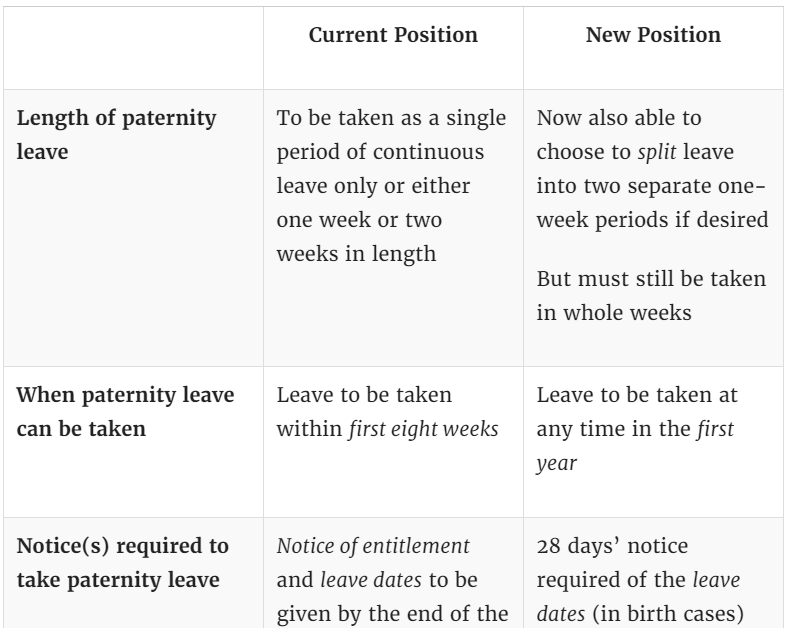
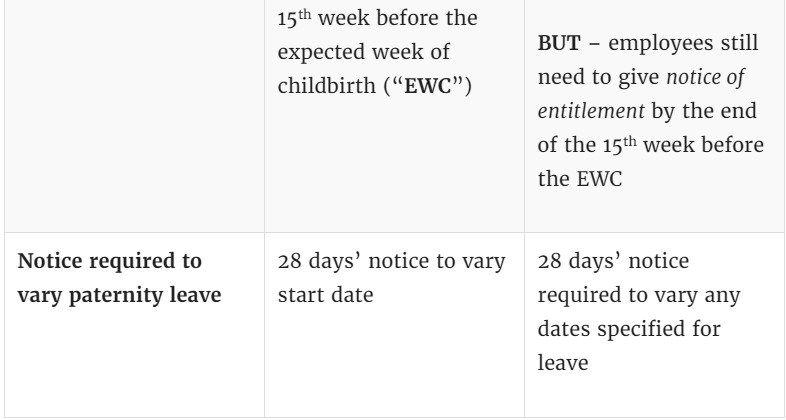
Note that for adoption cases the notice period for leave will remain within seven days of the adopter having received notice of having been matched with a child.
Why have the changes been made?
The decision to allow fathers and partners to take the two-week paid entitlement in two separate blocks of one week is intended to increase flexibility, as is the ability to take this leave at any time in the first year following childbirth or adoption, rather than just the first eight weeks.
The requirement to give notice of the intended leave dates for birth cases has also been significantly reduced to 28 days, which is intended to be more proportionate to the amount of time taken off work. However, under the new regime employees who wish to take paternity leave will still need to notify their employer of their entitlement to paternity leave 15 weeks before the EWC.
These changes will apply in relation to children whose expected week of childbirth begins after April 6, 2024. In adoption cases, the changes will apply where the child’s expected date of placement is on or after April 6, 2024.
Employers will need to update their paternity leave policies to reflect these changes and inform HR and employees of their new rights.
