Blog / Lexology Insights: Brexit
Eighteen months after the landmark referendum that saw the British public vote to withdraw the United Kingdom from the European Union, we look at the wealth of legal articles and updates articles published on Lexology and dive into how that content has been received.
Our combination of contributing authors and firms, combined with our readership base of over 300,000 subscribers, provides an amazing amount of information and gives a unique insight into Brexit through a legal lens.
Numbers 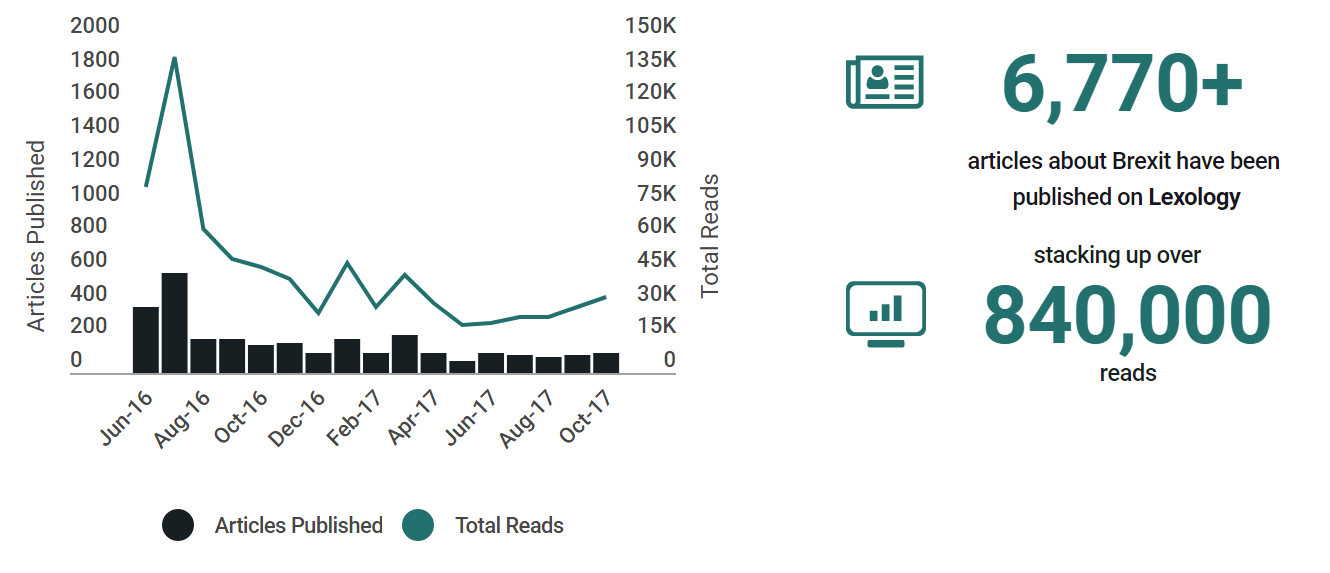
Both readership and publication levels soared immediately after the referendum on June 23 2016. In the following seven days, we published 300 new articles on Brexit and saw 63,664 reads across all articles tagged with Brexit - 11% of all global Lexology reads that week.
Since the initial surge, interest in the topic has generally slowed. However, there have been spikes in readership, notably in January 2017 and April 2017, which align with Theresa May's key speech (the precursor to the government's whitepaper) and the official triggering of Article 50, respectively. With negotiations underway in Brussels, readership levels seem to have picked up again over the last quarter as more legal ramifications appear.
Audience
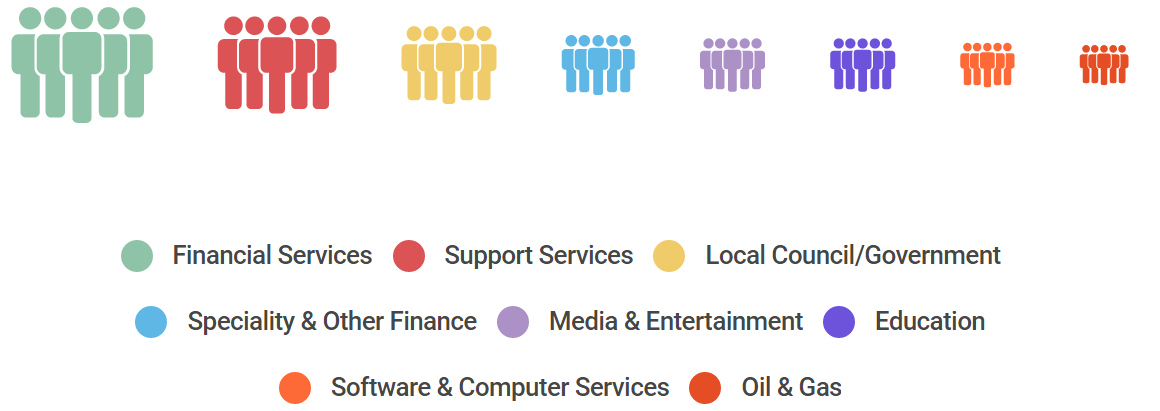
With issues such as passporting rights still unresolved, and several leading banks announcing plans to move staff and offices out of London, it is hardly surprising that financial services tops the list of sectors reading about Brexit.
Content
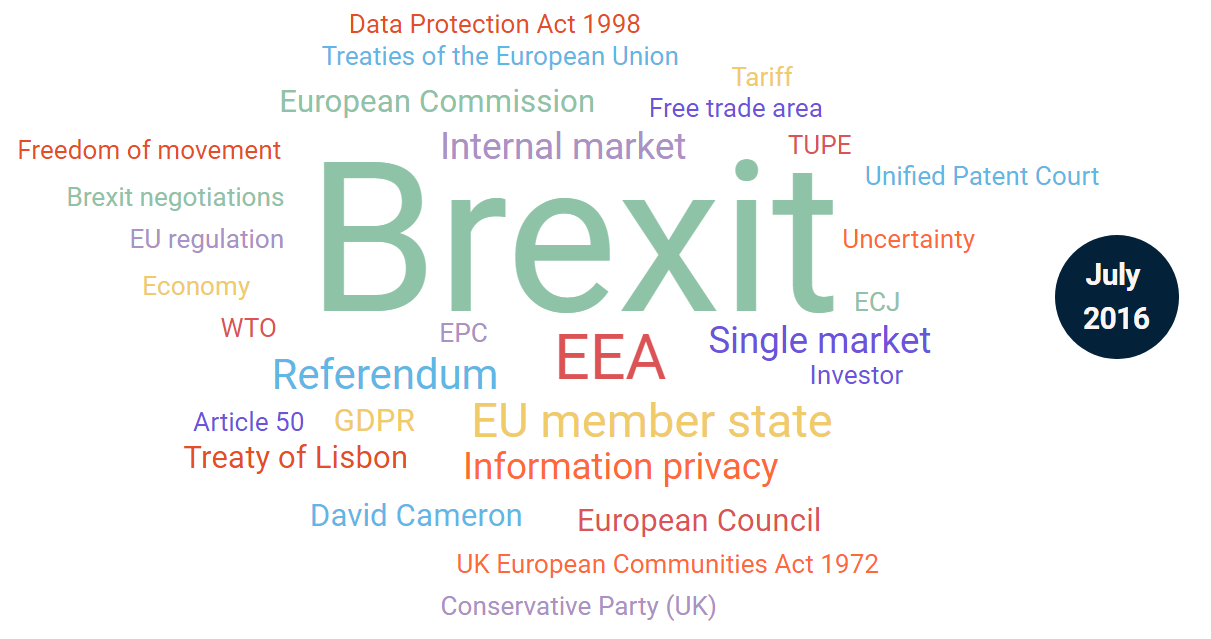
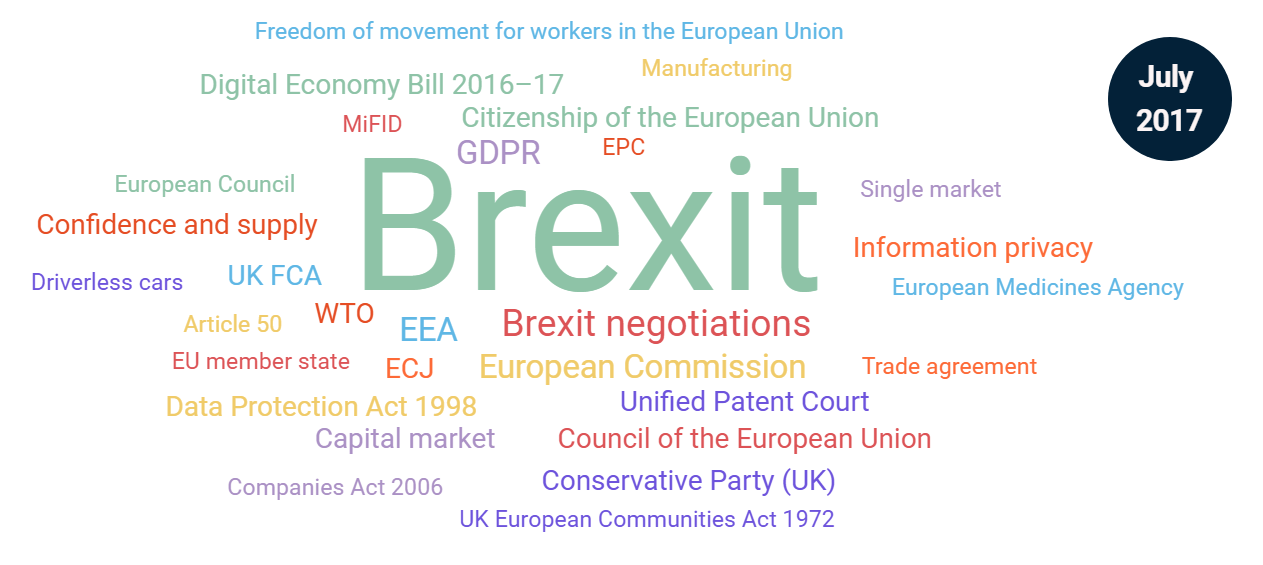
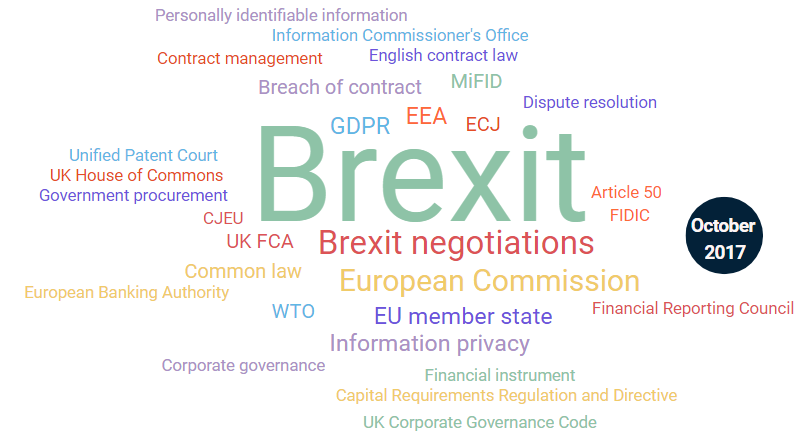
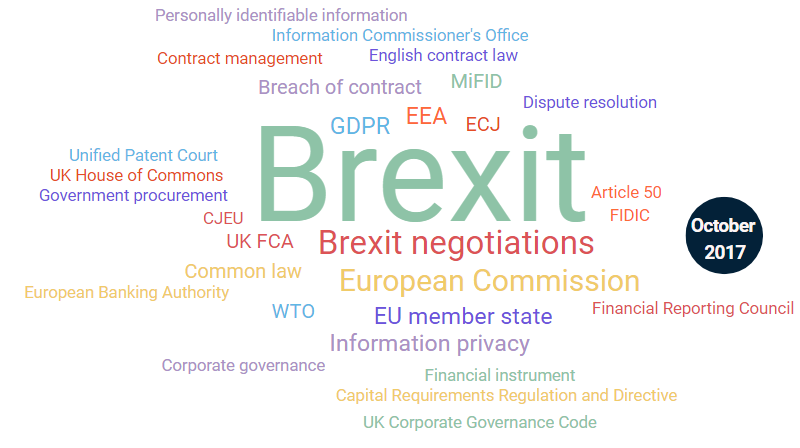
An analysis of the 30 most popular content tags across articles about Brexit - and how those tags have changed over a year - shows some interesting developments.
In July 2016, immediately after the referendum, Brexit content focused on what are now considered to be 'Brexit basics', with terms such as 'Treaty of Lisbon', 'EU member state' and 'referendum' featuring heavily.
One year on, Brexit is still ever present but, by July 2017, the content had shifted to exploring the outworkings and consequences of Britain's independence. Every major issue now seems to have a Brexit slant: terms such as 'GDPR', 'driverless cars' and 'Digital Economy Bill' have become more prevalent, while 'David Cameron' and 'internal market' no longer feature.
By October 2017, we see 'common law', 'CJEU' and contract-related terms make an appearance, with a general focus on the financial elements of Brexit.
This content will undoubtedly shift again as we approach the March 2019 withdrawal date; we are looking forward to seeing how readership trends and the content change as the negotiations develop.
To stay up to date with all Brexit legal news, follow our Brexit content hub at www.Lexology.com/hub/brexit