

The judgment dated 03 July 2023 of Delhi High Court, in Jayson Industries Vs Crown Craft India Pvt. Ltd addresses the crucial issue of design novelty and originality. The plaintiff, who holds Design Registrations 326707, 326883, and 326882, accused the defendant of design piracy. Central to the plaintiff's claim is the novelty and uniqueness of the designs of their bucket, mug, and tub. According to the plaintiff, these products incorporate distinctive shapes, configurations, and surface patterns, setting them apart visually from similar items in the market. The plaintiff argued that the defendant's products are obvious and fraudulent imitations of their registered designs, constituting piracy. The following comparisons were made: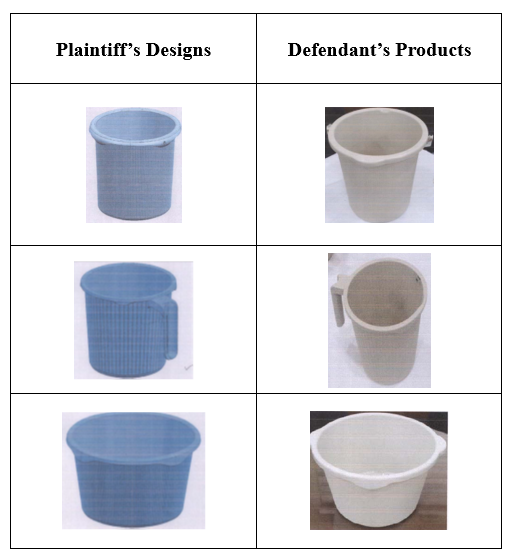
To support their claims, the plaintiffs presented various views of their registered designs, showcasing different angles and sections of each item. It was emphasized that the designs have been granted novelty based on their unique features, particularly the ribbed nature of the body and the flange-like extensions on the vessels' rims.
The dispute, initially filed before a District Judge (Commercial Court), was transferred to the High Court due to the defendant's plea challenging the validity of the suit designs. The district court had previously granted an ex-parte ad interim injunction in favour of the plaintiffs, restraining the defendant from selling, marketing, distributing, or supplying the disputed bucket, mug, and tub. The ex-parte interlocutory injunction remained in force, and the defendant sought relief and vacation of the injunction.
In response to the allegations, the defendant raised questions on the imitative nature of the designs and challenged the validity of the suit designs. The defendant argued that the Designs Act, 2000 lacks a provision similar to the Trade Marks Act, 1999, which statutorily presumes the validity of a registered trademark. Contrarily, the defendant claimed that there is no such presumption of validity for a registered design under the Designs Act. Additionally, the defendant contested the novelty and originality of the suit designs, seeking their cancellation based on grounds such as lack of novelty, originality, and prior publication.
The defendant presented various documents, including brochures and registered designs to demonstrate the lack of novelty and originality in the suit designs. The argument emphasized that even slight differences in the shape of flanges or other minor changes would not save a design from invalidation if it were deceptively similar to the prior art. Furthermore, the defendant contended that trade variants of the existing prior art cannot be considered "original" within the meaning of the Designs Act. These contentions gave rise to a prima facie triable issue challenging the validity of the designs.
The court conducted a thorough examination of the application of the law to the presented facts, particularly focusing on the issue of design novelty. Based on the principles outlined in the Designs Act, the court raised doubts regarding the novelty and originality of the suit designs. It concluded that the suit designs lacked novelty and originality, leading to the rejection of the plaintiff's request for an interlocutory injunction
The court analysed the suit designs, specifically highlighting the plaintiffs' claimed novel and original features: the vertical ribs along the length of the designs and the flanges on the rim. However, upon careful examination of the prior art, the court found no convincing evidence that these features were indeed novel and original.
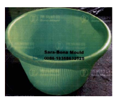
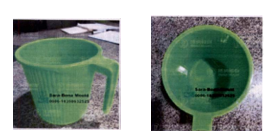
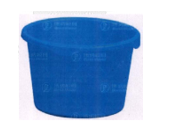
The court held that the vertical ribs along the length of the bucket, tub, and mug, as well as the extended flanges at the rim, were not unique to the plaintiffs' designs. It cited various prior art references that demonstrated the existence and use of similar features before the plaintiffs' designs came into play. Following were the prior design documents:
i) Bathroom tub as uploaded by Sara China Bona Mould:
ii) Mug as uploaded by Sara China Bona Mould:
iii) Tub No. BN2103169 invoiced by Bona Mould to Crown Craft,
iv) Mug No. BN2103170 invoiced by Bona Mould to Crown Craft
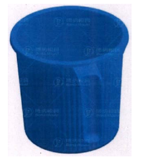
v) Bucket from the catalogue of Migeplastics
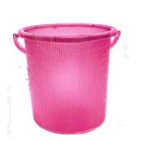
vi )Design 784645, registered in favour of David A. Richardson.
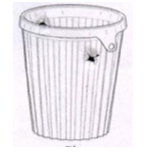
vii )SeMius Durable Practical Solid Geometric Shape Storage Garbage Household Trash Can, available on amazon .in since 14 March 2019:
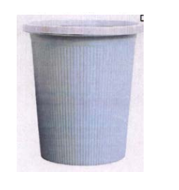
The court observed that the vertical ribs in the suit designs were identical to those found in the prior art. While there were some minor variations in the shape, number, and extent of protrusion of the flanges, the court considered these changes as trade variants rather than substantial differences. Therefore, the court deemed the defendants' challenge to the suit designs' novelty and originality credible, resulting in the rejection of the plaintiff's request for an interlocutory injunction.
The court's decision emphasizes the significance of demonstrating novelty and originality in design disputes and underscores the necessity of thorough prior art investigation to support assertions of uniqueness and exclusivity. It also highlights the cruciality of conducting comprehensive prior art searches before making accusations or initiating legal action for design infringement.
