


This question is currently being tested before the EU Grand Board of Appeal in a case that could have significant implications in how image rights are protected in the EU.
Why register your image as a trade mark?
There are a few good reasons why a public figure, athlete, entertainer or celebrity, or might wish to register their image as a trade mark:
- Control over commercial use: Registration provides the legal right to prevent unauthorised third parties from using your likeness on goods or services without consent, offering stronger protection than relying solely on passing off or image rights.
- Licensing and monetisation: A registered trade mark can be licensed to third parties, creating a clear legal framework for endorsement deals, merchandise, and sponsorship arrangements.
- Deterrent effect: A registered trade mark acts as a public record of ownership, discouraging potential infringers and providing a clear basis for enforcement.
- Protection against AI-generated content and deepfakes: With the rise of artificial intelligence and deepfake technology, registering one's image provides an additional layer of protection against the misuse of a person's likeness in digitally manipulated content.
- Enhanced enforcement remedies: Trade mark registration unlocks statutory remedies, including injunctions, damages, and the ability to pursue infringement claims more efficiently than under common law causes of action.
The EU case
In the Netherlands, singer and TV presenter Jan Smit (real name Johannes Hendricus Maria Smit) filed an EU trade mark application to register a a high-resolution photograph of his own face. The application covered a broad range of goods and services across classes 9, 16, 24, 25, 35 and 41 - everything from recordings to clothing to entertainment services.
Here is the application:

The European Union Intellectual Property Office ("EUIPO")refused the application on the basis that a realistic image of a person's face would be perceived by the average consumer as simply a decorative or promotional feature, not an indication of commercial origin.
Jan Smit's position is straightforward. In the EU, his image is clearly recognisable as his own, closely associated with his commercial output, and already functions as an indication of commercial origin. In other words, it is a face that already operates as a brand.
The case was appealed to the Second Board of Appeal, which referred it to the Grand Board of Appeal on grounds of legal uncertainty and the need to clarify the standard applicable to this category of marks.
What about the rest of the world?
Some jurisdictions appear more flexible in this area.
South Africa
In South Africa, the South African Trade Marks Office has granted the Nelson Mandela Foundation registered rights for the image of Nelson Mandela (shown below). This registration protects the late statesman's likeness and allows the Foundation to control and licence the commercial use of his image, ensuring it is used in a manner consistent with his legacy and values. The registration serves as a notable example of how a person's image can be protected as a trade mark, even posthumously, and demonstrates the broader application of image rights protection beyond celebrities in the entertainment or sports industries.
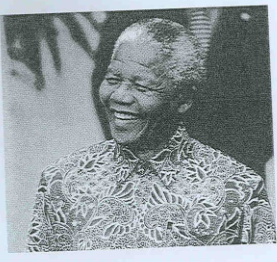
*Source: South African Trade Marks Office
UK
The UK Intellectual Property Office ("UKIPO") has granted registered rights to Jan Smit for his image (as shown above). The UKIPO also recently permitted the registration of an application by footballer Cole Palmer for his image (shown below)

Key lessons
The Nelson Mandela Foundation's registered trade mark for Nelson Mandela's image demonstrates that such registrations are achievable in South Africa. This precedent is significant for local celebrities, athletes, and public figures who may wish to formalise protection over their likeness. Unlike passing off or privacy-based claims under the common law, a registered trade mark provides clearer rights, statutory remedies, and the ability to license one's image with legal certainty.
In light of the growing threats posed by AI-generated content and deepfakes, South African athlete, entertainers, celebrities and public figures would be well advised to consider trade mark registration as part of a broader strategy for protecting their image rights.
While the outcome of the Jan Smit case before the EU Grand Board of Appeal will not be directly binding in South Africa, it may nonetheless influence local practice and provide persuasive guidance on how trade mark offices should approach applications of this nature.
