


Trademarks are crucial for identifying and differentiating goods services in the marketplace. Traditionally, trademarks were limited to words, logos, and symbols. However, as the marketplace becomes more diverse and businesses looked for creative ways to establish their identities, non-conventional trademarks have gained significance. These trademarks extend beyond traditional forms and include elements like shapes, colours, sounds, smells, and motions. India, with its growing economy and competitive business environment, is beginning to recognise protect such trademarks.
1. Scope of Non-Conventional Trademarks in India
Non-conventional trademarks are marks that do not conform to the traditional definitions of a trademark (i.e., words, logos, and symbols). The Indian Trade Marks Act, 1999 has slowly adapted to the growing need for protection of such unconventional marks. Non-conventional trademarks include:
Shape Marks:
Shape marks are three-dimensional shapes that distinguish goods or packaging. A shape mark needs to be distinctive and not simply a functional or common shape. An example in India would be the shape of a Coca-Cola bottle or the Toblerone chocolate bar’s triangular shape.
Case Law: The case of Nestle SA v. Cadbury India Ltd. (2012)[1] is an example where the issue of shape marks was addressed. Nestlé argued that the shape of its KitKat bar (specifically the four-finger shape) had acquired distinctiveness in India. While the case was more about trade dress, it highlighted the importance of shape as a source of identification in India.
Colour Marks:
Colour marks involve using a specific colour or combination of colours linked to a particular product. The colour must be so distinctive that consumers can associate it with a specific brand. A famous example is the purple colour used by Cadbury for its chocolate packaging.
Case Law: The case of Cadbury India Ltd. v. ITC Ltd. (2010)[2] highlighted the issue of colour trademarks. Cadbury successfully argued that its shade of purple had become distinct and associated with its chocolate products.
Sound Marks:
A sound mark is a sound or a combination of sounds that is associated with a brand or product. This can include jingles, tunes, or any sound that uniquely identifies the source of goods or services.
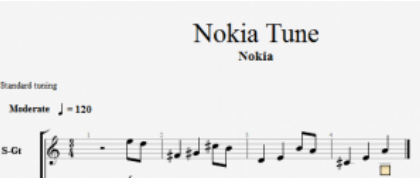
Case Law: In the case of Nokia Corporation (2006), the court held that Nokia’s ringtone was a recognizable sound and granted it protection as a sound mark.
The European Union has registered the signature tone of Nokia Corporation[3] as below:
NBC filed the first sound mark application in 1950 for the familiar NBC three chime sounds for radio services.
Smell Marks:
While the registration of smell marks is still in the early stages, they are recognized in India. A smell mark involves a specific scent associated with a brand. However, due to the difficulty of representing smells clearly, this category is less explored.
The USPTO recognized scent as a registrable trademark for “sewing thread and embroidery yarn”. The application drawing identified the mark as “a high impact, fresh floral fragrance reminiscent of Plumeria blossoms”. The Board in this case (Registration No. 1639128) revered an examining attorney’s refusal to register on the ground that the public would not perceive the fragrance as an indication of origin; stating, “We see no reason why a fragrance is not capable of serving as a trademark to identify and distinguish a certain type of product” in re Clark, 17 U.S.P.Q.2d 1238 (T.T.A.B. 1990)
Motion Marks:
A motion mark is a moving image or a sequence of images that can be associated with a brand. An example is the Google Doodle, which changes for special occasions such as holidays or birthdays.
Case Law: In India, there is limited precedent for the registration of motion marks. In India, the first motion mark to be filed was Nokia’s ‘CONNECTING HANDS’ mark under Registration No. 1246341. However, the Registry records show that the mark has been registered as a device mark rather than a motion mark. This is probably why India has not seen any applications for motion marks until recently.
In other instances, the Trade Mark Registry has also registered some motion marks (e.g., Registration Nos. 4192672 and 4192678).
The USPTO has also applied for Registration No. 2106424 – Global positioning system receivers – The mark consists of a moving image of a spinning globe.
Hologram Marks:
Hologram marks are three-dimensional representations that can be viewed from different angles. These marks are used to create a distinctive visual effect that distinguishes a brand from others. An example could be holographic logos used in high-end packaging.
Position Marks:
Position marks are marks that consist of the specific way in which the mark is placed on the product. A very easy example of this is the Levis mark, which is available specifically on the back pockets of the Levis Jeans. The image representation of the same is:

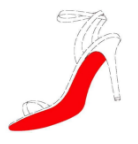
Another example of position marks is the Louboutin Heels which are the heels with red bottoms specifically made by Christian Louboutin SAS. The image representation of the same is:
2. Registration of Non-Conventional Trademarks in India
The process for registering non-conventional trademarks in India follows a similar procedure to that of conventional trademarks but with additional complexities. The Indian Trademark Act, 1999 provides the legal framework, and the procedure is governed by the rules laid out by the Office of the Controller General of Patents, Designs, and Trademarks (CGPDTM).
Filing the Application
The applicant must file a trademark application with the Trademark Registry to register a non-conventional trademark. The application should specify the type of mark being applied (e.g., colour, sound, shape), and the mark must be represented in a clear and specific manner. For example, sound marks require an audio file, while colour marks require a precise colour code (Pantone, RGB, etc.).
Examination by the Registrar
Once the application is filed, the Trademark Registry examines it to ensure it meets the legal requirements. The mark must be distinctive and should not be generic, functional, or commonly used in the industry. For non-conventional marks, the registrar examines whether the mark has acquired secondary meaning—whether consumers associate it specifically with the applicant’s goods or services.
Case Law: The Colgate Palmolive Company And Anr. vs Anchor Health And Beauty Care Pvt. Ltd. on 29 October, 2003[4] case examined the use of colour marks. The court held that the defendant by adopting the colour blend of red & white has committed the offence of passing off.
Opposition and Hearing
The mark has been published in the Trademarks Journal if the application meets the examination requirements. If no opposition is filed within four months, the mark is registered. If there are oppositions, the applicant may have to go through a hearing where both the applicant and the opponent present their arguments.
For cases in the US, one of the challenges faced by the opposer is that they have the initial burden in the T.T.A.B. of showing that the applicant’s proof of acquired distinctiveness submitted before the Examining Attorney is insufficient.
Grant of Registration
If there are no objections or oppositions, or if the opposition is resolved in favour of the applicant, the mark is granted registration. The registered mark is then protected under Indian law, providing the owner exclusive rights to use the mark in commerce.
3. Challenges in the Registration of Non-Conventional Marks
Despite the growing recognition of non-conventional marks, there are several challenges involved in registering these types of trademarks in India.
Distinctiveness
The primary challenge for non-conventional trademarks is establishing distinctiveness. For a mark to be registered, it must be capable of distinguishing the goods or services of one entity from those of another. Non-conventional marks, such as colours, shapes, or sounds, often fail to meet this requirement because they may be viewed as functional, common, or decorative in nature.
Clear Representation
Non-conventional trademarks, particularly sound and smell marks, present a challenge in providing a clear representation unlike traditional trademarks, which are easy to depict visually the application must accurately represent sound and smell marks.
Proving Secondary Meaning
Non-conventional trademarks must demonstrate that they have acquired secondary meaning. This means proving that consumers immediately associate the mark with a specific source of goods or services. This can be a long and costly process, especially for newer or less established marks.
Global Protection
While India has made progress in recognizing non-conventional trademarks, obtaining international protection for such marks can be difficult. The registration process for non-conventional marks varies across jurisdictions, and businesses wishing to protect their marks internationally must navigate different laws and practices.
Conducting a Search
Searching for non-conventional trademarks, like colours, sounds, smells, or textures, is difficult because there are a few databases for these types of marks, and they can be hard to describe or recognize. These trademarks are often subjective, and it can be tough to prove whether they are unique or just common features of the product. Most trademark databases are set up for traditional marks, like words or logos, making it hard to find non-traditional ones.
Some databases may include non-conventional marks, but they are often organized by text or images, which doesn’t work well for non-conventional trademarks like sounds or smells. Additionally, non-conventional marks are more subjective and harder to prove as unique and to add onto that, different countries have different rules for registering them. Proving that people recognize these marks can also be challenging. Because of these issues, searching for non-conventional trademarks requires special knowledge and advanced tools to navigate the process.
4. Drawbacks of Non-Conventional Marks
While non-conventional trademarks offer innovative ways to distinguish products, there are several drawbacks associated with their use.
Limited Scope of Protection
The protection granted to non-conventional trademarks may be narrower than that of traditional word or logo marks. For instance, a colour mark may only be protected in connection with specific goods or services and may not extend to other industries.
Higher Registration and Legal Costs
The registration process for non-conventional trademarks is often more expensive than traditional trademarks. Due to the complex nature of these marks, businesses may need to invest in expert legal services to navigate the application and opposition process.
Enforcement Challenges
Enforcing non-conventional marks can be difficult, especially in cases where the mark is not widely recognized. For example, proving that a particular colour, sound, or shape is being used in a way that infringes on a brand can be complex and requires substantial evidence.
Risk of Dilution
There is a risk that non-conventional marks may lose their distinctiveness over time. If the mark is used by multiple companies or becomes commonplace in the industry, it may be subject to dilution, weakening its ability to distinguish one brand from another.
5. Conclusion
Non-conventional trademarks in India represent a unique and creative way for businesses to protect their brand identity in a competitive marketplace. While the registration process for these marks can be complex, the recognition and protection of such trademarks offer businesses an upper hand in the marketplace and help them further distinguish themselves.
One of the major issues concerning the protection and registrability of nontraditional marks includes the non-availability of protection of a product design, product sound, or product motion after a patent covering the relevant feature expires. In simple words, the patented technology is available to the public domain after its expiration along with the product’s sound, motion or design, which again poses a threat of being copied.
However, non-conventional marks come with their own set of challenges. From proving distinctiveness to facing enforcement difficulties, businesses must carefully consider the drawbacks of registering these marks. As India continues to develop its intellectual property laws, non-conventional trademarks will likely become an increasingly important aspect of brand protection.
The evolving legal landscape suggests that with careful strategy and legal guidance, businesses can harness the power of non-conventional trademarks to build and protect their brand identities.
