




Incorporating everything from full-fiber broadband, blockbuster movies and local cable TV, the US telecommunications and media sector is a huge and fragmented industry, primed for consolidation. Indeed, the media and entertainment space alone is expected to be worth US$3.5 trillion by 2029, according to PwC.
The deeply atomized nature of the sector makes it ripe for M&A. Household names such as AT&T, SpaceX, Warner Brothers, Paramount and Netflix have all been in the frame as acquirers or targets, and dealmaking in the industry is flourishing.
A stellar line-up
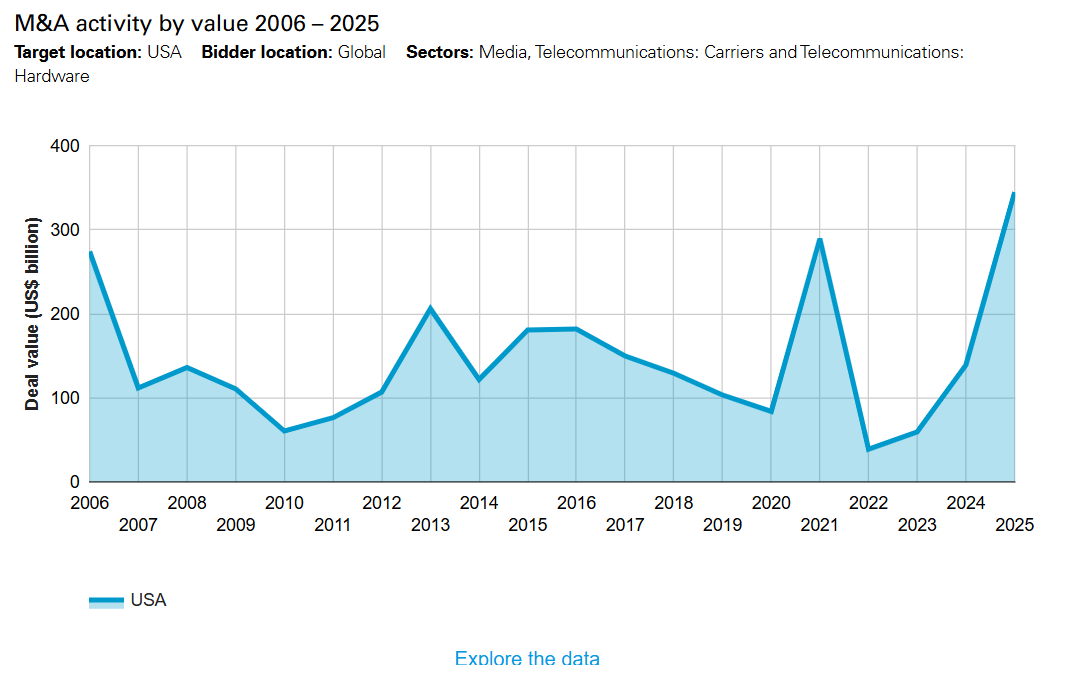
The US telecom and media sector has posted consistent growth over the past few years, with 2025’s deal value hitting a record high, according to Dealogic figures.
There were 364 deals (up from 360 announced in 2024) in the sector last year, totaling US$344.7 billion—a 147 percent value increase on the previous year. It should be noted, however, that the value figure is somewhat inflated because the top two deals announced last year were both for the same target.
There have been 45 deals this year so far (up to March 2), totaling US$9.6 billion. The bulk of the value figure came from Abu Dhabi sovereign wealth fund Mubadala’s US$6.2 billion takeover of US billboard operator Clear Channel Outdoor Holdings.
In 2025, the largest announced transaction was Paramount’s US$107.9 billion hostile bid for Warner Bros Discovery. This came only three days after streaming giant Netflix announced it would pay US$82.7 billion for the historic film studio and streaming assets—an ultimately unsuccessful bid that was terminated in late February this year, when WBD accepted Paramount Skydance’s sweetened offer of US$111 billion.
The third largest deal of the year was the proposed merger between two of the US’s largest cable TV operators: Charter’s US$34.5 billion deal to acquire Cox Communications. The landmark merger takes place as the industry faces extreme pressure from streaming services.
Another significant media deal is regional TV operator Nexstar Media’s agreement to acquire smaller rival Tegna for the sum of US$6.2 billion. The deal aims to create a local TV powerhouse better able to compete with Big Tech and legacy media companies.
A major deal in the telecom sector saw industry giant AT&T agree to acquire key wireless spectrum licenses from EchoStar for the sum of US$22.7 billion in cash. EchoStar has come under pressure from the Federal Communications Commission in relation to its use of the spectrum, and President Donald Trump is said to have pushed for the parties to reach a consensual deal.
The move comes as AT&T looks to boost its fiber and 5G network build-out in the face of growing competition, with the newly acquired licenses covering more than 400 markets across the US. AT&T also secured a US$5.7 billion deal to acquire Lumen Technologies’ consumer fiber operations earlier in the year.
Elon Musk’s SpaceX also agreed to spend US$22 billion acquiring wireless spectrum licenses from EchoStar with a mix of cash and SpaceX stock. The purchase will enable Musk’s company to provide Starlink’s cellular services to regular cellphone users around the world, thereby eliminating mobile “dead zones.” Originally, these services were only available to users with specially enabled phones.
Driving trends
M&A in the sector is being driven by a wide range of market forces, including the need to on-board AI technologies, capture intellectual property and customize offerings in a competitive market.
In addition, continued dealmaking in the industry is likely to be characterized by megadeals as businesses look to gain scale in a transforming market. The Charter-Cox merger, which would create the nation’s second largest broadband provider after Comcast, exemplifies this trend. Pursuing scale enables operators to meet the high cost of completing 5G rollouts and nationwide fiber deployments.
Traditional media and entertainment companies are also under pressure from Big Tech making inroads in the industry. This will act as a catalyst for deals as media outfits strive for a level playing field with larger tech companies. The need to expand offerings and acquire “evergreen” IP could result in more cross-sector deals.
Meanwhile, the FCC approved the US$8 billion merger between Paramount Global and Skydance Media in July 2025 and is said to be considering ending a merger ban among the four largest US broadcast networks, namely NBC, ABC, CBS and Fox. If the ruling goes ahead, it could pave the way for further consolidation across the industry.
Challenges on the horizon
Competition from external players is a major challenge facing the industry. This is particularly true within the cable TV industry, which has been weakened by the ongoing expansion of streaming services.
The trend of viewers choosing more flexible and personalized services has resulted in a sharp decrease in revenue and viewing numbers for traditional cable players. According to ratings organization Nielsen, streaming now accounts for more total TV usage than broadcast and cable combined.
Despite the president’s pro-business approach, uncertainty surrounding the direction of the administration’s tariff policy could hinder dealmaking moving forward. As recently as September, Trump threatened a 100 percent tariff on non-US-made movies. While it is unclear how such tariffs would be imposed or calculated, such protectionist sentiment could deter cross-border investment into the industry.
The president has also taken aim at certain TV networks, suggesting in September that they could lose their licenses for broadcasting coverage that is unfairly critical of him, but noting the decision would be up to the FCC, which issues them. While the extent to which the FCC can revoke licenses is unclear, it is thought that they could effectively stop corporate mergers by blocking the transfer of broadcast licenses to the new owners. Either way, more uncertainty in the market would be an unwelcome development to executives looking to close deals.
OutlookBusinesses in the telecom and media space are experiencing a range of pressures in today’s competitive market. M&A will present an important tool to meet these demands and to thrive, not just survive, in the future.
While uncertainties loom on the horizon, they are largely out of businesses’ control. The fact remains that investor appetite for telecom and media deals remains extremely strong, with both sectors perfectly poised for consolidation.
