


Introduction
On 25 January 2024, the Court of Justice of the European Union (the ”CJEU”) delivered its judgment in case C-334/22 (Audi v. GQ), concerning the right of Audi, as the proprietor of the below EU trademark, to prohibit the use of a similar sign on spare parts. The case concerned radiator grilles sold by a supplier of spare parts for motor vehicles which contained a carved space for the insertion and attachment of Audi’s emblem, corresponding to the outline of Audi’s EU trademark.
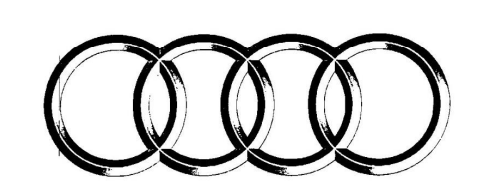
The CJEU held that such conduct could amount to trademark infringement and that the repair clause in Article 110(1) of Regulation No 6/2002 (the Community Design Regulation) did not apply in this case. Furthermore, such conduct is not exempted as referential use of a trademark under Article 14(1)(c) of Regulation (EU) 2017/1001 (“EUTMR”), in particular where the choice of the shape of the element intended for the attachment of the car manufacturer’s emblem is driven by the desire to market a spare part that is as similar as possible to the original grille.
Facts
Audi sought an injunction from the Regional Court in Warsaw, Poland, to prohibit a third party from importing, selling and advertising radiator grilles including a carved space for the insertion and attachment of Audi’s emblem, on the ground that this carved space was identical or similar to Audi’s figurative EU trademark (four interlocking rings). Audi claimed that the defendant had infringed Audi’s trademark by reproducing the shape of the Audi emblem on the grilles. The defendant, a natural person, manufactured and sold radiator grilles for old Audi models. These grilles contained an element in the shape of the Audi logo, so that the customer could attach the original Audi emblem to the grille.It should be noted that the actual Audi emblem as such was not included in the radiator grilles.
The national court was faced with the question of whether the scope of the trademark protection extends to elements designed to attach the Audi emblem to radiator grilles which were identical or similar in appearance, in particular in shape, to the Audi trademark. According to the national court, trademark protection should not confer on the proprietor the exclusivity denied by design law. The national court argued that it would undermine the purpose of the repair clause, which is intended to protect undistorted competition, to prevent a manufacturer of a non-original part from using the trademark of the original part, while not preventing him from producing and selling spare parts for the car manufacturer’s vehicles without a trademark.
In addition, the national court, faced with the interpretation of Article 14(1)(c) of the EUTMR, asked the CJEU whether the use of the trademark on the radiator grilles was covered by the exception allowing its use to indicate the purpose of a product, such as spare parts. Furthermore, the national court asked whether the importation and offering for sale of the grilles constituted ‘use in the course of trade’ within the meaning of Article 9(2) of the EUTMR.
CJEU decision
First, the CJEU held that the repair clause in the Community Design Regulation was not applicable in this case. According to its case law, the repair clause only imposes limitations on the protection conferred on designs and is without prejudice to EU trademark law (see e.g. C-500/14, Ford Motor Company paragraphs 39, 41 and 42). The limitations of trademarks in the interest of undistorted competition are laid down in the relevant provisions of trademark law on exclusive rights and limitations thereof (Articles 9 and 14 of the EUTMR) and it is not possible to limit trademark protection beyond these provisions on the basis of design law.
With regard to the alleged infringement of the Audi trademark under Article 9(2) of the EUTMR, the CJEU found that the affixing of an element to a non-original spare part for the purpose of inserting and attaching the original emblem of the car manufacturer constitutes use of a sign in the course of trade and that the grilles could be liable to infringe the function of the trademark as an indication of origin and quality. The CJEU therefore concluded that it was for the national court to determine whether the radiator grille element was identical or similar to the Audi trademark and whether the grilles were identical or similar to one or more of the goods for which the trademark was registered.
Furthermore, the CJEU held that the referential use exception under Article 14(1)(c) of the EUTMR did not apply. The Court interpreted the use of the shape of the Audi emblem as not being necessary to indicate the intended use of the grilles since it did not affect their functionality or their compatibility with older Audi cars, but was an aesthetic choice made by the manufacturer in order to market a grille that resembled the original grille as closely as possible. Therefore, the use of the shape of the Audi emblem was not considered to be justified under this exception.
It should be noted that the CJEU did not follow the Advocate General’s opinion. The Advocate General concluded that the provisions of EU trademark law must be interpreted as meaning that the affixing of an element to a non-original spare part for the purpose of inserting and attaching the original trademark of the car manufacturer does not constitute ‘use of a sign in the course of trade’.
Comment
The CJEU found that a car manufacturer can prohibit the use of a sign identical or similar to its trademark for spare parts. The decision opens the door for companies to design specific shapes for their emblems on parts that are visible and replaceable. Spare parts suppliers will effectively be forced to supply spare parts without emblems, which will be less attractive to consumers, or obtain a license from the trademark holder. The decision is therefore a success for car manufacturers who want to prevent the use of unoriginal spare parts. However, Audi benefited from the fact that the outline of its interlocking rings is distinctive and does not form a common circle or rectangle.
In addition, the CJEU did not extend the scope of the referential use exception to allow a supplier of spare parts to include a carved space in the spare part, the shape of which is identical or similar to a trademark, in order to attach the car manufacturer’s emblem for the purpose of marketing the spare part. Thus, the protection of EU trademarks remains strong under EU trademark law.
Furthermore, this case confirms that the repair clause in design law has no equivalent in trademark law and is not applicable by analogy in trademark law. This is relevant where the proprietor of the trademark is also the proprietor of a Community design and where the proprietor of the trademark is the sole manufacturer of the original part. In these situations, the question is whether the exclusive right to the trademark can prevent others from manufacturing and selling the spare part. The rejection of the repair clause for trademarks is correct from a trademark law perspective, but if companies aggressively use trademark features to restrict competition from spare part suppliers, this could lead to competition law complaints, as the purpose of the repair clause is to protect competition in the important automotive aftermarket.
Key takeaways:
• The repair clause does not apply to trademark law and therefore cannot limit trademark protection.
• The referential use exception in Article 14(1)(c) of the EUTMR does not apply to the use of a carved space for the insertion and attaching of an emblem corresponding to the outline of an EU trademark on a spare part.
• The use of a trademark by a spare part manufacturer constitutes use in the course of trade. The fact that the average consumer will not perceive the grille as original is irrelevant.
