


Many states have expressed frustration with the lack of an enforceable federal per- and polyfluoroalkyl substances (“PFAS”) drinking water standard, and have started the process of regulating PFAS in drinking water themselves. As a result, states have adopted a patchwork of regulations and standards that present significant challenges to impacted industries. This client alert focuses on the maximum contaminant levels (“MCLs”), as well as guidance and notification levels for PFAS – typically perfluorooctane sufonic acid (“PFOS”) and perflurooctanic acid (”PFOA”) – in drinking water that have been enacted or proposed by various states.
1. State Regulations
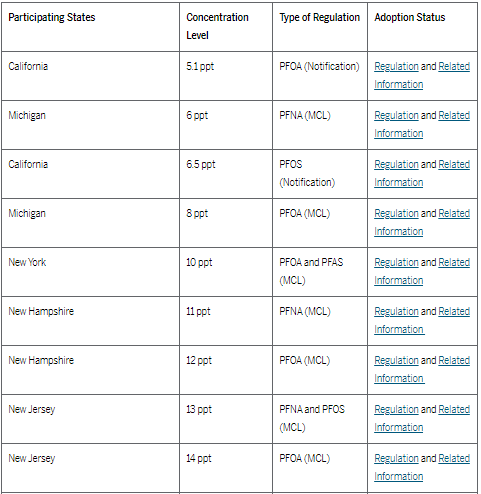
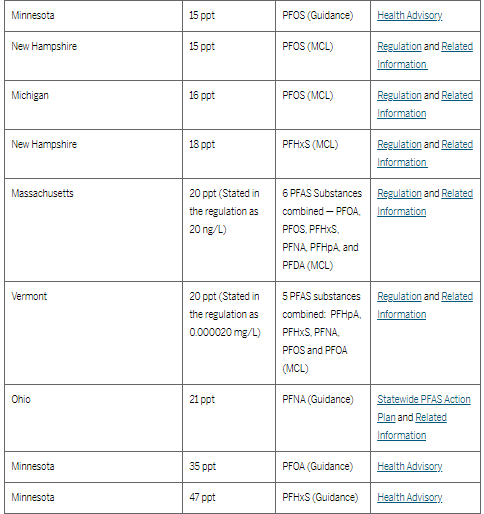
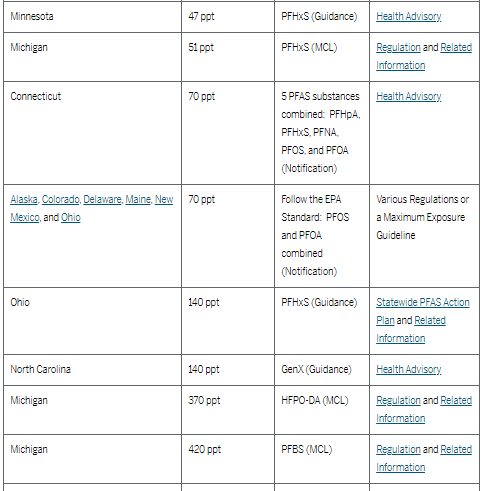
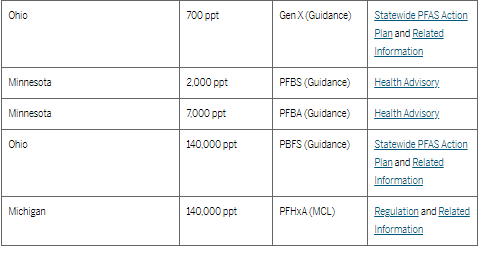
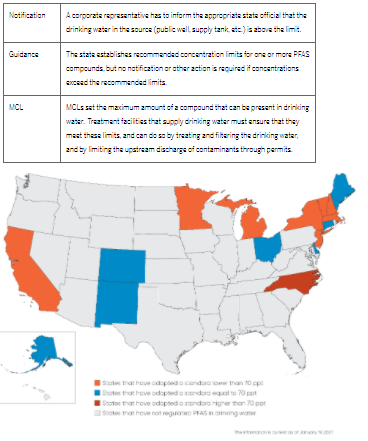
The following chart is current as of January 19, 2021. Some states, including Rhode Island and Washington, have proposed Drinking Water regulations for PFAS, reinforcing the fact that this is an area of regulation that is developing quickly. In addition, President Biden’s Environmental Justice Plan includes a commitment to set “enforceable limits for PFAS in the Safe Drinking Water Act,” presumably for PFOA and PFOS, so the entire country may soon be subject to enforceable MCLs for at least those two PFAS compounds.
No regulations:
Alabama, Arizona, Arkansas, Florida, Georgia, Hawaii, Idaho, Illinois, Indiana, Iowa, Kansas, Kentucky, Louisiana, Maryland, Mississippi, Missouri, Montana, Nebraska, Nevada, North Dakota, Oklahoma, Oregon, Pennsylvania, Rhode Island, South Carolina, South Dakota, Tennessee, Texas, Utah, Virginia, Washington, West Virginia, Wisconsin, and Wyoming
Key:
2. How Do These Limits Impact Businesses?
MCLs set the maximum concentration of a given contaminant that can be present in drinking water. Publicly owned treatment works (“POTWs”) and drinking water systems are required to ensure that drinking water distributed to the public meets these limits. In order to do that, POTWs and state agencies often include discharge limits in the permits of upstream dischargers to ensure that the treatment facility can comply with the MCL.
Businesses that currently or historically have used PFAS compounds or have reason to believe that they may be present in their wastewater effluent should evaluate: (1) whether they discharge any substances to water that are eventually used for drinking water; and (2) whether their discharge contains any of the regulated PFAS compounds. Having that information will allow those businesses to determine whether to modify their operations to reduce or eliminate PFAS from their waste stream in anticipation of permit conditions based on the different state PFAS regulations.
3. Additional Considerations
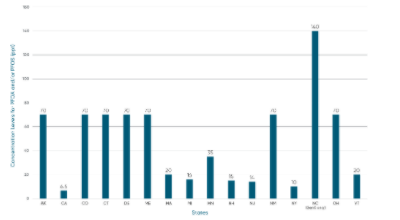
Without a federal PFAS standard, there is a large discrepancy between the regulatory standards established by the various states. For example, for PFAS substances in drinking water, the smallest concentration is 5.1 ppt (California; PFOA only) and one of the largest values is 140,000 ppt (Michigan; PFHxA only). The chart below illustrates the discrepancies between the regulatory levels for PFOA and/or PFOS.
4. Conclusion
For more information on PFAS chemicals, and the regulatory and litigation risks that they pose, please visit our PFAS webpage. If you have a question about how to manage PFAS risk in any jurisdiction, contact Tom Lee, John Kindschuh, or any other member of our PFAS team at Bryan Cave Leighton Paisner LLP.
