


In the recent decision 4 Ob 97/24d, the Supreme Court dealt with the question of the limits of parody.
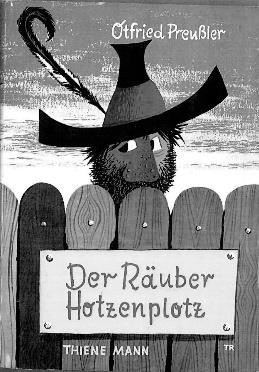
The plaintiff is a publishing house which is entitled to various rights to the children's book series "Der Räuber Hotzenplotz" by Gottfried Preussler. This children's book series is extremely well known in Austria. A characteristic feature of "Hotzenplotz the Robber" is his large black hat with a turned-up brim, red hatband and a large feather. The character of "Räuber Hotzenplotz" is depicted on the covers of the individual books in the series in such a way that he is standing behind a fence and looking over it:
The first defendant is the regional party chairman of the second defendant; the second defendant is a political party. The defendants criticised the Mayor of Vienna and his party as part of a political campaign under the title "Räuber Rathausplatz" ("Robbers Rathausplatz"). They also used a graphic depiction of the mayor standing behind a fence and wearing a similar "robber's hat".
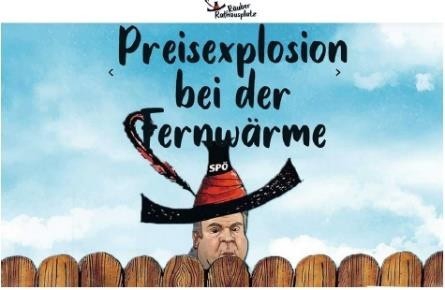
The plaintiff publisher applied for an interim injunction for infringement of (i) the right to title protection for the title "Der Räuber Hotzenplotz", (ii) the well-known trade mark with the same name and (iii) the copyright for the graphic representation of the "Räuber Hotzenplotz", in particular the hat.
The defendants essentially argued that they were known for their critical stance on the social situation in Vienna. They had launched a political campaign against the SPÖ, focussing on the provincial governor and mayor. The latter is figuratively stylised as a robber and accused of taking money out of citizens' pockets in an exaggerated manner. The accusation of "robbery" or "robber barony" etc. is a common term in political disputes. It is a parody and the aim is exclusively politically motivated.
The court of first instance refused the requested interim injunction. The appeal court upheld the appeal in part. It also denied an infringement of title protection and trade mark law, but affirmed an infringement of copyright. The Supreme Court confirmed the decision of the Court of Appeal, in particular its legal opinion that there was no free use of the original work. According to the Court of Appeal and the Supreme Court, justification as a "political parody" does not apply.
According to case law, an encroachment on copyright with reference to freedom of expression is only justified if the latter fundamental right cannot be exercised or can only be exercised inadequately without the encroachment. The existence of these criteria was denied, as the defendants did not use the protected image of the "Hotzenplotz robber" to prove the accuracy of their statement that the politically criticized person was behaving like a robber towards taxpayers. The defendants have also neither satirically nor parodistically dealt with the protected work or with the "Räuber Hotzenplotz" depicted therein. Rather, the target of their statement is someone else. As a result, the defendants have interfered with a protected work with the purpose of illustrating a certain opinion (which they are free to express) with a suitable work of visual art created by someone else. This purpose pursued by the mere instrumentalization of another's work does not justify the infringement of copyright. This procedure lies outside the freedom of quotation according to § 42f para. 1 UrhG.
The Supreme Court has thus confirmed that the freedom of parody does not only end with discriminatory content or a demonstrable violation of material interests. Rather, a comprehensive balance must be struck, in which the interest of the rights holder, in this case in a children's book, in not being associated with a political campaign (whatever the content) must also be taken into account.
