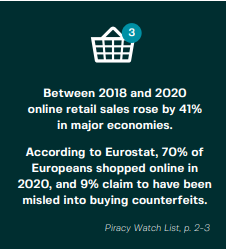
Recent data from the European Commission show that counterfeit goods continue to make up around 2,5% of global trade and an estimated 5,8% of all imports from third countries in the EU.
An updated ”piracy watch list” may help consumers avoid websites known to be engaged in counterfeit and pirating, but unfortunately counterfeits are still difficult to evade, especially in the growing market for second-hand goods.
IPR infringements cause high financial losses for rightsholders and undermine sustainable IP-based business models. A study by the EU Intellectual Property Office (EUIPO) and the Organisation for Economic Co-operation and Development (OECD) from 2021 reports that USD 464 billion worth of counterfeit and pirated goods were traded worldwide in 2019. In the EU, this amounted to approximately EUR 119 billion. Data from the study also shows that consumers find it especially difficult to distinguish between genuine and fake goods online.
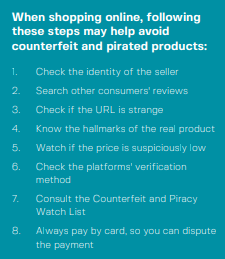
Verification methods
Different forms of verification methods exist, to help consumers with only buying authentic products. However, verification may no be the same as authenticity.
Private verification labelling
The sale of counterfeit goods over the internet presents a threat to rightsholders, consumers and platforms. For the latter, e-commerce platform's efforts to be regarded as safe places to purchase legitimate products are undermined. To help combat counterfeits and to comfort consumers in their online retailing, some e-commerce platforms have introduced their own verification methods towards primarily second-hand products, sometimes referred to as "private verification labels".
The use of private verification labels describes a platform's own verification process which is not endorsed by the original brand. The method raises issues, illustrated in a noteworthy number of examples, where brands have discovered that platforms (unintentionally) advertise counterfeit products as "authentic" or "verified authentic" pursuant to the platforms' own teams of authentication experts conducting the verification process. Thereby, consumers may end up buying counterfeit products while believing that the opposite is the case.
AI-powered authentication services
Another way of authenticating products is by using Artificial Intelligence (AI)-powered authentication services. The method helps automate and expand the process, by using algorithms for counterfeit recognition. The machines are designed to detect details that separate legit items from counterfeits and are used both by second-hand platforms and brands. More specifically, logo detection provides brands with the ability to automatically analyse marketplaces for counterfeit products purporting to be genuine articles under their brand.
In addition to this, they can also use visual search to spot common design imitation, such as distinctive patterns. With this technology, brands can analyse hundreds of millions of images per day.
Endorsed brand authentication
Endorsed brand authentication is conducted by an authorised distributor or the original brand, and obviously represents the safest way in terms of ensuring the purchased product’s authenticity. Some brands further argue that only they hold the necessary skill, training, know-how and special equipment on site to guarantee the authenticity of each product. However, this stand may raise concerns from a competition perspective, and may not be desirable from a market perspective.
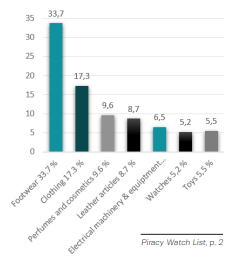
The EU detentions of counterfeits linked to e-commerce include a broad range of products led by:
The 2022 Watch List
The Commission has prepared a "Counterfeit and Piracy Watch List", which lists examples of reported marketplaces and service providers whose operators or owners are allegedly resident outside the EU, and who reportedly engage in, facilitate or in other ways benefit from counterfeit sales. The aim of the list is to raise consumer awareness and encourage authorities to take the necessary actions to reduce the sale of IPR infringing products on these markets. Since the 2020 Watch List, several enforcement actions and measures have been taken, and e-commerce platforms are adopting developments, including protection portals, reporting tools and policies.
Accura Comments
With the continuous rise of e-commerce and non-authentic/counterfeit products becoming increasingly difficult to separate from authentic products, great emphasis is put on the operators' verification methods. The ability to adequately verify third-party sellers has proven to be challenging, why efforts should be made to improve mechanisms for identifying counterfeit items and responses to the dynamic emerging challenges. Ultimately, these concerns, and the more significant issues they raise, will likely continue to arise and gain relevance as the value of the resale market increases.